Powered Surfing Guide for Beginners Legality Maintenance and Licensing

Powered surfing sits in the sweet spot between surfing, wakeboarding and personal watercraft. You get the glide of a board, the freedom to ride without waves, and the punch of a motor under your feet. That mix is exactly why powered surfboards, jetboards and eFoils have moved from niche toys to serious watercraft.
The appeal is easy to understand. A small motor can turn flat water into a rideable playground. Calm bays, wide rivers and sheltered lakes become places to carve, cruise and practise balance. For experienced surfers, powered boards add speed and control when the ocean is flat. For beginners, they offer a way to build board skills without waiting for a perfect swell.
They also come with real responsibility. A powered surfboard is not just a surfboard with extra fun attached. It is a motorised craft, often capable of high speed, operating around swimmers, paddlers, boats, wildlife and sensitive shorelines. Safe riding starts before the board touches the water.

What powered surfing is and why it feels different
Powered surfing covers several types of motorised board riding. The main categories are:
Jetboards
These use a small jet propulsion system built into the board. Many are petrol-powered, while newer models use electric motors.
Electric surfboards
These are battery-powered boards with handheld, wireless or wired throttle controls. They tend to be quieter than petrol boards.
eFoils
These use an electric motor and hydrofoil mast under the board. Once moving, the board rises above the water, which reduces drag and creates a floating feel.
Motorised rescue or utility boards
Some boards are designed for surf lifesaving, coaching or patrol use rather than recreation.
The biggest difference from traditional surfing is that the power source changes the learning curve. You do not need a breaking wave to move, but you do need throttle control. Small throttle inputs matter. Too much power too soon can throw a beginner backwards. Too little power can make the board unstable and hard to steer.
Powered surfing also changes where people ride. Instead of chasing surf breaks, riders often look for sheltered water with low boat traffic, enough depth, easy launching and room to turn. That sounds simple, but suitable water is not the same as legal water. More on that shortly.
For new riders, the best mindset is to treat the board as a small personal watercraft, not a beach toy. Wear the right gear, understand local rules, keep clear of others and ride within sight of a safe exit point.
How beginners should operate a powered surfboard safely
Good operation starts with a slow, deliberate setup. Rushing through launch is one of the easiest ways to damage gear or put someone at risk.
Check the conditions before you launch
Choose calm water for the first sessions. Light wind, small chop and clear visibility make learning much easier. Avoid crowded swimming areas, surf zones, narrow channels, ferry routes and boat ramps during busy periods.
Before riding, check:
Wind direction and forecast changes
Tide movement or river current
Water depth across your riding area
Rocks, weed beds, sandbanks and submerged timber
Boat traffic and no-go zones
Any local signs about motorised craft
A beginner area should have enough depth for the board’s fin, jet intake or foil mast. eFoils often need much deeper water than a standard board, especially while launching and falling.
Wear the right safety gear
At a minimum, wear a properly fitted personal flotation device. In many places, it is not optional. A helmet is also sensible, especially for eFoils, high-speed boards and shallow or crowded water.
Useful gear includes:
A rated PFD or lifejacket suited to the location
A water sports helmet
Impact vest or wetsuit for warmth and protection
Whistle or other sound signal where required
Leash or kill switch lanyard, if the board is designed for one
Bright clothing so boats can see you
Never disable a kill switch. On powerful boards, the kill switch is a key safety feature because it cuts propulsion if the rider falls.
Learn throttle control first
Start on your stomach or knees if the manufacturer recommends it. Keep the board pointed into open water with no people or obstacles ahead. Apply a small amount of throttle and feel how the board reacts.
A simple beginner progression works well:
Practise stopping
Learn to release the throttle and let the board slow. Do this before trying speed runs.
Ride prone or kneeling
Build a feel for balance, tracking and throttle response.
Move to a low stance
When standing, keep knees bent, hips low and eyes forward.
Use gentle turns
Shift weight gradually. Powered boards can carve quickly once they gain speed.
Fall away from the board
If you lose balance, push clear and protect your head. Do not try to grab the board at speed.
The safest early sessions feel slow. That is a good thing. Control comes before speed.

Respect right of way and shared water
Powered surfing often happens near kayaks, paddleboards, swimmers and small boats. The rider with the motor has the greater duty to avoid others.
Keep a wide buffer from:
Swimmers and flagged beach areas
Surf schools and beginner surfers
Wildlife, including dolphins, seals and nesting birds
Boats at anchor and moored vessels
Shorelines where noise or wake may disturb others
Cross boat wakes at a sensible angle and avoid sudden turns in front of other craft. If in doubt, slow down and give way.
Where powered surfing is legal and what rules usually apply
The legality of powered surfing varies widely. Some places welcome it under existing boating rules. Others restrict it because of speed, noise, wildlife protection, swimmer safety or unclear classification.
This section is general information only, not legal advice. Always check the local maritime authority, harbour master, council, park agency or waterway manager before riding.
Region | Common approach to powered surfing | What to check before riding |
Australia | Motorised boards may be treated as personal watercraft or small powered vessels, depending on the state, propulsion type and waterway. Rules differ between NSW, Queensland, Victoria, Western Australia, South Australia, Tasmania, the ACT and the Northern Territory. | Marine licence rules, PWC registration, lifejacket requirements, local exclusion zones, speed limits and personal watercraft operating areas. |
New Zealand | Rules can sit under maritime bylaws and regional council controls. Local harbour or lake rules may be more important than national guidance. | Regional navigation bylaws, speed restrictions, lifejacket rules and areas closed to powered craft. |
United States | Rules vary by state and waterbody. Some agencies treat motorised surfboards as vessels or personal watercraft. National parks and local lakes may ban or limit them. | State boating laws, registration, operator age, local launch access and whether electric boards are treated differently. |
Canada | Powered boards may fall under small vessel or powered craft rules, with extra limits on some lakes, parks and conservation areas. | Proof of competency requirements, vessel safety rules, local park restrictions and cold-water safety rules. |
United Kingdom and Europe | Rules can be strict on inland waterways, harbours and beaches. Some countries classify powered boards as personal watercraft, while local authorities may restrict launching. | Harbour bylaws, insurance requirements, CE or product compliance, speed zones and designated riding areas. |
Tourist destinations and resorts | Many resorts allow powered surfing only through licensed operators or guided sessions. Private riding may be banned in swimming or reef areas. | Resort policies, protected marine areas, insurance, supervision rules and local enforcement. |
In Australia, do not assume a powered surfboard is legal just because paddleboards or surfboards are allowed. Motorised craft often face separate rules. Some beaches and lakes have clear signs. Others require checking state marine safety pages or calling the relevant authority.
Electric boards can create confusion because they are quieter and may look less like a boat. That does not mean they are exempt. If a board has a motor, many regulators will focus on propulsion, speed and risk, not whether the motor is petrol or electric.
The safest legal rule of thumb is simple: if it has a motor, treat it like a regulated watercraft until the local authority confirms otherwise.
How to keep powered surfing equipment in top condition
Powered boards live in a harsh environment. Salt, sand, heat, vibration and water pressure all work against batteries, seals, motors and electronics. A few minutes of care after each ride can prevent expensive repairs.
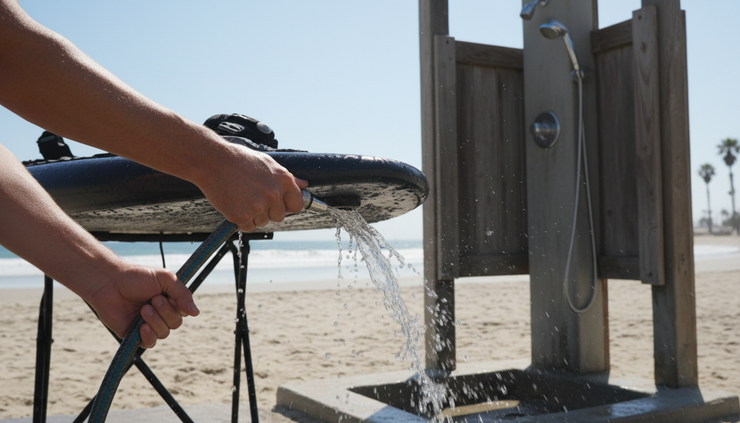
Rinse and dry after every saltwater session
Salt left on the hull, jet intake, foil mast, connectors or fasteners can cause corrosion. Rinse with fresh water after riding, then let the board dry before storage.
Pay attention to:
Charging ports and caps
Battery contacts
Propulsion housing
Fin boxes or foil connections
Screws, locking pins and clips
Hand controller and wrist leash
Do not blast delicate seals or electronics with high pressure unless the manufacturer allows it. A gentle rinse is usually safer.
Inspect the board before and after riding
Small cracks, loose screws and damaged seals can become serious once the board is under load. Make inspection part of your routine.
Before riding, check:
Battery is locked in place
Remote or throttle is paired and charged
Kill switch works
Hull has no cracks or deep gouges
Intake or prop area is clear
Fins, mast or foil wings are secure
Leash attachment is undamaged
After riding, look for impact marks and listen for trapped water inside the board. If water enters a sealed compartment, stop using the board until it has been inspected.
Look after batteries with care
Electric surfboards and eFoils rely on large lithium batteries. They need sensible handling.
Follow the maker’s charging instructions and use the supplied charger. Charge in a dry, ventilated area away from direct sun. Let the battery cool before charging if it is hot after a ride.
For storage, many manufacturers recommend keeping batteries partly charged rather than full or empty for long periods. Check the manual for the correct storage level and top-up schedule.
Never use a swollen, leaking, overheated or damaged battery. If a battery has been submerged beyond its rating or involved in a heavy impact, get professional advice before charging it.
Service the drive system
Petrol jetboards need engine care, fuel system checks and, often, winterising or longer-term storage preparation. Electric boards need fewer moving-part checks, but still require attention to seals, cooling paths, bearings and connectors.
For jet propulsion systems, keep the intake clear of weed, gravel and plastic. Do not run the motor in shallow water where sand can get sucked through the system.
For eFoils, protect the mast, fuselage and wings from knocks. Even small chips can affect ride quality. Use covers during transport and tighten fasteners to the manufacturer’s recommended settings.
Store and transport the board properly
Heat can damage batteries, seals and deck materials. Avoid leaving the board in a hot car or direct sun for long periods. Use a padded bag for transport and secure the board so it cannot slide, bounce or rub against metal racks.
A good storage spot is:
Dry
Shaded
Ventilated
Away from fuel, solvents and sharp tools
Safe from children handling batteries or throttles
Maintenance is not just about resale value. It keeps the board predictable on the water, which makes it safer.
Licensing requirements are different everywhere
Licensing is one of the most misunderstood parts of powered surfing. A rider may need no licence in one location, a general boating licence in another, and a personal watercraft endorsement somewhere else.
In Australia, state and territory rules matter. Some powered surfboards may fall under recreational vessel or PWC requirements, especially if they meet local definitions of a motorised craft. Registration may also apply to the craft itself. Because wording and enforcement can differ, check the state maritime authority before buying or riding.
Common licensing factors include:
Rider age
Engine type and power
Maximum speed
Whether the board is classed as a vessel or PWC
Where it is used, such as open water, inland lakes or rivers
Whether it is used privately, commercially or for hire
Local insurance or registration rules
Commercial use brings extra duties. Hire operators, instructors and tour providers often face stricter conditions than private riders. These may include business permissions, safety briefings, rescue plans, public liability insurance and trained staff.
Insurance is also worth checking. Home contents or travel insurance usually will not cover a powered board in use. Specialist watercraft insurance may require proof of licence, approved storage, serial numbers and compliance with local laws.

Before your first independent session, run through this checklist:
Confirm the board is allowed on that waterway.
Check whether you need a marine licence or PWC endorsement.
Check whether the board must be registered.
Read local speed limits and distance-off rules.
Confirm lifejacket requirements.
Avoid protected areas and swimming zones.
Carry any required identification, licence or registration proof.
The Powered Surfing Guide for Beginners Legality Maintenance and Licensing comes down to one practical idea: powered surfing is most enjoyable when the safety, legal and maintenance basics are handled before the ride.
Start in calm water. Learn throttle control before chasing speed. Treat other water users with care. Rinse, inspect and store your board properly. Most of all, check the rules where you ride, not where someone online says they ride.
Do that, and powered surfing becomes what it should be: a fast, smooth and memorable way to enjoy the water without turning every session into a risk.


Comments